

Published October 31, 2026
NEWPORT BEACH | CITY HALL WATCH | OCTOBER 31, 2026
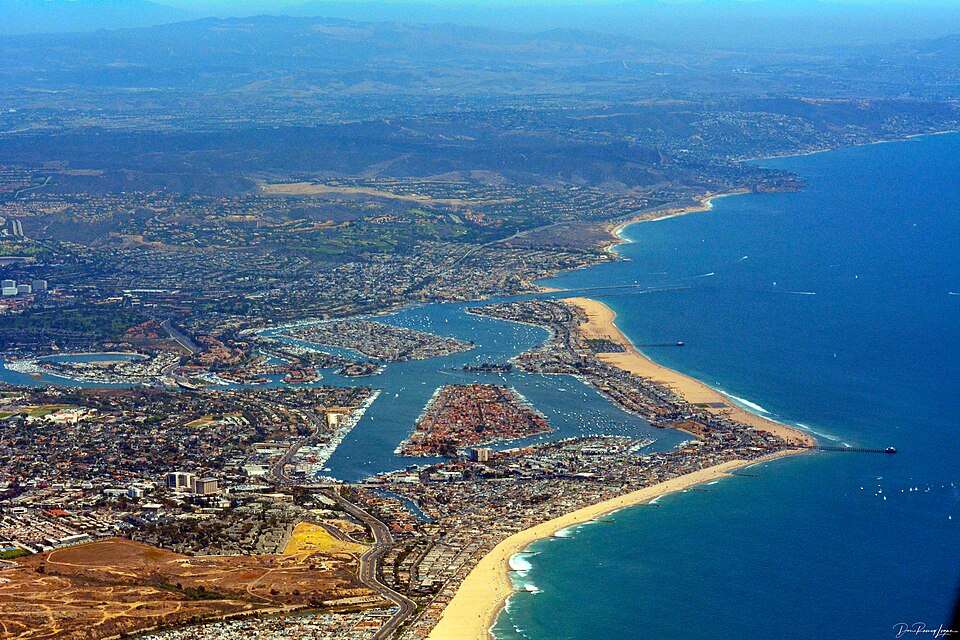
Every time you pay to park at Balboa Pier or a boater pays mooring rent, the money lands in a set of harbor accounts. At the end of fiscal 2024–25, those accounts held $69.3 million combined. Here’s what that money is, and what City Hall still hasn’t shown us.
The basics
Newport manages state-granted tidelands, including parts of the harbor, bay beaches and ocean beaches, as a trustee. Under the public trust, that money has to go to trust purposes: the harbor, navigation, beaches, marinas, recreation and habitat.
The city says tidelands revenue from leases, parking and oil pays for things like harbor maintenance, dredging and lifeguards, and that expenses “almost always exceed” revenue. That’s its explanation for why the accounts get General Fund help while sitting on big balances.
The FY 2024–25 audit
- Tidelands Operating: $17.34 million revenue, $6.02 million spent directly, $12.26 million transferred in, $20.32 million transferred out, ending at $11.81 million.
- Harbor Capital: $9.51 million revenue, $0.95 million spent directly, $5.83 million transferred in, ending at $57.50 million, up $14.40 million.
The $20.32 million went from Operating to the General Fund as reimbursement for tidelands-related costs. The General Fund sent $12.26 million back into Operating and $5.83 million into Harbor Capital. Net, about $8.05 million flowed to the General Fund. The money went out the front door and came back through the side door, and both doors open onto the General Fund.
Is $57.5 million a surplus?
The audit says all of it is restricted for harbor capital projects. The city says it grew largely from investment earnings and projects that didn’t start. Harbor Capital’s budget allowed about $10.42 million in capital spending. It spent $945,000, a gap of roughly $9.48 million.
A budget is permission, not a bill. Permits, design and bids slow things down. But when a capital fund grows because projects don’t start, locals deserve a project-by-project list of what’s delayed and why. A harbor plan that mostly capitalizes on not starting things is an awkward way to build a harbor.
Where it comes from
The FY 2023–24 tidelands report showed $24.5 million in revenue: $11.3 million in leases, about $5.0 million parking, $3.6 million rents and $1.6 million oil. The Balboa Bay Club lease alone brought about $6.04 million.
That report also broke down the $19.333 million reimbursement that year: $1.377 million citywide overhead and $17.956 million in direct services, including $7.710 million marine safety, $3.644 million Public Works, $3.349 million police, $2.510 million fire and EMS, and $742,484 parking operations.
So the prior year wasn’t a mystery lump sum. But FY 2024–25’s transfer was bigger, $20.318 million, and the audit doesn’t break it down.
No leak. Still a to-do list.
A big restricted balance isn’t proof money disappeared. The State Lands Commission’s December 2025 review flagged potential legal problems in the mooring and residential-pier programs, not the harbor funds generally.
What locals should ask for: the FY 2024–25 cost allocation plan, the Harbor Capital carryover schedule, and how much of the $57.5 million is committed to each future project.
The city already showed its work once. Doing it every year shouldn’t require a harbor pilot and a CPA.
Sources
- Read the city’s explanation of harbor tideland charges.
- The City’s audited FY24–25 Annual Comprehensive Financial Report
- The FY23–24 Tidelands Annual Financial Report
- California State Lands Commission: Newport Beach public trust lands management report
This story is checked every 3 days for its first 30 days. When there’s news, we add a dated update here. How we keep stories current →
Help us out, Newport.
Read next
 City Hall WatchSave Balboa Village: 5 Small Business Ideas for Newport Beach City HallFrom the Balboa Island Ferry to 15th Street Surf Shop, Newport's legends are small businesses. Balboa Village is hurting, and City Hall is still "considering" how to help. Here are…Read story →Suggestion 1 of 5
 City Hall WatchNewport Beach Shipped Real Sand to Four Empty New York Storefronts. Balboa Has Empty Storefronts Too.Visit Newport Beach turned four vacant Manhattan storefronts into a Newport vacation, real sand and all. Back home, Balboa Village has empty storefronts of its own.Read story →Suggestion 2 of 5
 City Hall WatchNewport Beach Rehired Stapleton, Weigand and Kleiman. Balboa’s To-Do List Is Still on the Counter.Same council, four more years. Here's what's still waiting on the Balboa Peninsula, from P, Q and R to $27.4 million.Read story →Suggestion 3 of 5
 Around NewportNewport-Mesa High School Students Can Take College Classes for Free This SpringHere's something Newport families might actually want to get ahead of: local high school students can take college classes this spring without paying tuition.Read story →Suggestion 4 of 5
 Surf & CoastWest Newport Is Getting $1.5 Million in Trucked-In Sand. The 62nd Street Groin Is Still a 1974 IOU.City Hall voted 5-0 to haul river sand into West Newport. The groin it planned at 62nd Street back in 1974 is still missing.Read story →Suggestion 5 of 5